





Type something to search...

All Articles

Practical Answers
blog-thumb
By Peter Lin/ On 12 Dec, 2025

Adult Products Often Get Rejected for Patents in China—Why?

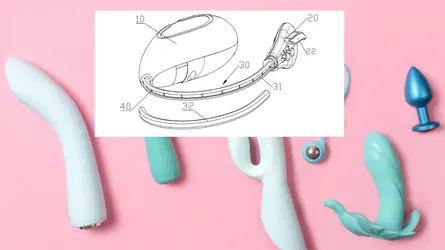
China's Patent Scene: Huge Opportunities, but Article 5 is a Hidden Minefield China's paAdult productsploding—global $50B by 2027 (Statista), with China leading manufacturing (Dongguan & Shenzhen). Yet Article 5 of the Patent Law is a silent killer, blocking grants for inventions seen as violating "social morality" or public interest. Designs saw a 15% rejection spike in 2024 due to visual cues, but utility and invention patents can stay steady if drafted right. The issue? Examiners tag products as "non-medical artificial sexual substitutes," sparking morality checks. From my examiner chats and database dives, if descriptions scream "intimate," initial reviews flop. Article content Kegel Exercises: Your "Medical Shield" to Bypass Article 5 How to flip it? Kegel exercises are your secret weapon. Developed by Dr. Arnold Kegel in the 1940s, these pelvic floor workouts help millions with incontinence, postpartum recovery, and quality of life (PubMed studies). In patents, a line like "vibration modes simulate Kegel contractions for muscle strengthening" shifts from "toy" to "health aid." Why? The 2023 guidelines say non-medical substitutes violate morals; Kegels provide real medical evidence (GB/T 14895-2010 standard), and examiners nod at that. In a case I handled, this turned a "no" into approval—but don't fake it; unsubstantiated claims risk fines. Article content patent illustration Drafting Magic: Lessons from a Smooth Success Case Drafting is the real art. Take CN223666103U, an "insertable electric massager" granted December 2025 without issues—just 10 months. It nailed it by focusing on "vibration mode indicators" over intimacy. CNIPA data shows medical-framed patents hit 85% approval in 2024, vs. 40% for pure adult ones. Here's their techniques vs. pitfalls I've fixed Article content This echoes trends: 2023 guidelines stress public acceptance—Taobao sales or Shanghai expos aren't "immoral." But controversies persist: Unproven health claims lead to rejections. Examiners aren't anti-innovation; they just need proof it's beneficial, not boundary-pushing. For Global Players: Stack US/EU Patents For global players, stack US/EU patents—USPTO's lenient on health claims, perfect for Amazon enforcement. Faced challenges in sensitive tech patents? Share below—I'd love your stories! #PatentStrategy #AdultWellness #ChinaIP #KegelInnovation #EntrepreneurJourney Key Citations: China National Intellectual Property Administration (CNIPA) Database Statista Adult Wellness Market Report PubMed on Kegel Exercises Beijing IP Court Case (2019) Jing 73 Xing Chu 3870 2023 Patent Examination Guidelines For more article, visit our Linkdedin newsletter: https://www.linkedin.com/newsletters/china-ip-gateway-7392039659566153728/
Practical Answers
blog-thumb
By Peter Lin/ On 12 Dec, 2025

PCT Patent Entry into China: A Cost Lock-In Mechanism Many Applicants Overlook

There is a moment, usually around month 28 or 29 of your PCT application's life, when your China IP strategy becomes a cost reality. The application that started as an idea — and grew through drafting, international search, and maybe some Article 19 amendments — now has to become a paid-up Chinese patent prosecution. What many applicants find surprising is how much of that cost was already locked in by decisions made much earlier. This is what I call the cost lock-in mechanism of PCT entry into China. What Gets Locked In at National Phase Entry When you enter China's national phase, CNIPA's official fees are calculated based on the application as it stands at entry. Specifically: 1. Claim count. China charges a per-claim surcharge for every claim beyond the first ten. If your PCT application has 25 claims, you're paying surcharges on 15 of them upfront — before a single examination action. This is calculated from the claims in your Chinese translation at the time of national phase entry. 2. Page count for specification. China's official fee structure also includes charges based on application length above a base threshold. A long international specification — common in US and European biotech or software filings — translates to elevated fees. 3. Translation volume. Unlike most Western patent offices, CNIPA requires a complete Chinese translation of your entire application at national phase entry. The word count in your international specification drives translation costs directly. A 200-page biotech specification translated at professional patent rates is a significant line item. 4. Number of independent claims. Prosecution strategy in China often hinges on independent claims, and CNIPA's fee structure treats them differently from dependent claims. Applicants with multiple independent claims per claim category (product + method + use) face compounded costs. Why "Lock-In" Happens in Practice These cost drivers are not surprising in isolation. What makes them a lock-in mechanism is that they were all set at the time your international PCT application was drafted — often 18 to 28 months before you ever think about China costs. The original PCT drafter may have been a US firm optimizing for a large US claim set. The specification may be 150 pages because that's what a US biotech application requires. The claims may number 30 because that's what a US prosecution strategy demands. None of that is wrong for the US. But entering China's national phase with that original application, unchanged, means you're paying for a US-optimized filing in a system with a very different fee structure. The Three Levers You Can Still Pull Even though costs are largely locked in by the original application, you do have options to reduce them — if you act before national phase entry. Lever 1: Amend claims before entry. Under PCT provisions and China's national phase rules, you can amend your claim set when entering the national phase. Reducing from 25 to 10 claims before filing the Chinese translation eliminates surcharges on 15 claims from day one. Work with a China Patent Attorney to identify which claims are commercially necessary in China and which are redundant for your specific enforcement context. Lever 2: Trim the specification. If there are entire sections of your specification that are irrelevant to your China commercial strategy — detailed manufacturing examples for processes you don't use in China, regulatory guidance for systems not sold there — you may be able to reduce the document length without affecting claim support. This is technically sensitive work and needs expert review, but can materially reduce translation and page-count fees. Lever 3: Time your filing carefully. CNIPA applies fee rates based on the filing date. Fee schedules are periodically updated. While this is not always a controllable variable, large multinationals with portfolios sometimes time batch filings to a known fee period. A Cost Estimate to Make This Concrete For a typical mechanical or hardware China Patent application entering via PCT with 20 claims and a 50-page specification, you're typically looking at:Official filing fee: ~RMB 950 base Claim surcharges (10 claims over base × RMB 150): RMB 1,500 Translation (50 pages × professional rate): RMB 5,000–12,000+ Professional services (national phase formalities, claim strategy): variableCompare that to the same application trimmed to 10 claims: the surcharge line drops to zero. Over a portfolio of 20 applications entering China in a single year, that's a meaningful difference. The Upstream Solution The best time to manage China national phase costs is not at month 29. It's at the drafting stage, when you structure your PCT application with China's fee logic in mind. This doesn't mean writing a weaker patent. It means structuring claims and specifications in a way that is both strong for the US and efficient for China — not identical, but compatible.Ready to plan your China national phase entry? Our China Patent team works with applicants at every stage of the PCT timeline. Or speak with a China Patent Attorney to review your pending applications before the 30-month deadline.

China IP Guides
blog-thumb
By Peter Lin/ On 10 Dec, 2025

12 vs. 30 Months: Mastering the Critical Windows for China Patent Protection

Two numbers define your strategic window for China Patent protection: 12 months and 30 months. Get them confused, miss one of them, or misunderstand what they actually trigger — and you could lose rights that no amount of money can recover later. I've seen this happen. A founder assumes the 30-month PCT deadline applies to their situation, misses the 12-month Paris Convention window, and loses China priority. The patent can still be filed, but it now faces prior art that didn't exist when the clock started. Let me walk through both windows precisely. The 12-Month Window: Your Priority Clock Starts Here When you file your first patent application anywhere in the world — whether a US provisional, a UK complete application, or a Chinese utility model — a clock starts. Under the Paris Convention, you have 12 months from that first filing date to file in other member countries (including China) and claim priority back to that original date. What "claiming priority" means in practice: if you file in China within 12 months of your original filing, CNIPA will treat your application as if it was filed on the original date. Any competing applications or disclosures that appeared after your original filing date won't be counted as prior art against you. The 12-month deadline is absolute. There is no extension. If you miss it, you cannot claim Paris Convention priority for that filing. What happens at month 12 if you're going via PCT? Nothing special — as long as you file your PCT application before the 12-month Paris Convention deadline. Your PCT application, filed within 12 months of your original application, preserves your priority date and pushes your real China national phase decision out to month 30. This is the key insight: filing a PCT application within 12 months doesn't mean you're entering China at month 12. It means you're buying time until month 30 while protecting your priority date. The 30-Month Window: Your China Entry Deadline If you've gone the PCT route, month 30 from your original priority date is when you must enter the Chinese national phase. This means:Submitting your Chinese translation of the full application Paying China's official filing fees (calculated on claim count and page count) Formally committing to prosecution in ChinaMissing the 30-month deadline is also absolute for most countries. China does not provide a general grace period for late national phase entry. A missed deadline means you must re-file without priority — and everything that's been published in the intervening 30 months can be used against you. The Zone Between 12 and 30 Months: Use It Most inventors and even some IP teams treat this 18-month window as administrative dead time. That's a waste. Here's how to use months 12–30 productively: Refine your claim strategy. Use this time to assess the Chinese market, identify your most commercially valuable claims, and prepare for the slimming strategy I've written about separately. You have until month 30 to decide exactly what claims you need in China. Commission quality translation. A Chinese patent translation done in a rush at month 29 is a liability. A translation reviewed over two to three months, with technical input from your team and legal review from a China Patent Attorney, is an asset. Watch the competitive landscape. PCT applications are published at 18 months from priority. That means by month 18, your application is public. Use the window from month 18 to 30 to monitor what competitors are filing in China — this directly informs whether your claim strategy needs adjustment. Amend under PCT Article 19 or 34. You have specific windows to amend claims and request preliminary examination during the international phase. These amendments can be used strategically to strengthen your position before China national phase entry. A Timeline You Should Pin to Your WallMilestone Deadline Consequence of MissingFile PCT application Month 12 from original filing Lose Paris Convention priorityPCT application published Month 18 Application becomes publicInternational Search Report Typically months 16–22 Evaluate claim viabilityPCT Article 19 amendments Before 16 months from priority Window to amend claims internationallyChina national phase entry Month 30 from priority Lose right to enter (no recovery)One Exception Worth Knowing Design patents (外观设计) in China follow a different, shorter path. The Paris Convention priority window for designs is only 6 months, not 12. If you're protecting a product's appearance — packaging, industrial design, device form factor — that 6-month window applies and moves much faster.Planning your China patent timeline? Our China Patent team manages your PCT timeline from first filing through national phase entry. Or speak directly with a China Patent Attorney about your specific situation.

Practical Answers
blog-thumb
By Peter Lin/ On 08 Dec, 2025

Paris Convention vs. PCT in China: A Critical Difference Most Inventors Miss

Last year a Dutch hardware startup came to me eight months after filing their first patent in the Netherlands. They had a working product, a potential distributor in Shenzhen, and a growing sense that they should probably protect something in China. Eight months was still within the Paris Convention window. But when I asked whether they had a finalized Chinese translation of their specification ready to file, the answer was no — and their September launch timeline meant four months were the most they could realistically get. That conversation is where the Paris Convention versus PCT question becomes real. In theory, both routes let you claim your Netherlands filing date as your priority date in China. In practice, only one of them gave this team the time they actually needed. The two main options are the Paris Convention direct route and the PCT route, and in China specifically, there are differences that can significantly affect your cost, timeline, and final patent scope. The Basic Framework Both routes allow you to claim the priority date from your original domestic filing when you eventually file in China. That priority date matters enormously in China's first-to-file system — it determines whether you beat a competitor to protection rights.Paris Convention route: File directly in China within 12 months of your first filing date. PCT route: File an international PCT application (within 12 months of your first filing), then enter China's national phase within 30 months of your priority date.That extra 18 months the PCT route provides is not just a filing convenience. It's a strategic window that most inventors underuse. The Critical Difference Most Miss Here's what I see inventors get wrong again and again: When you file directly into China via the Paris Convention route, you must have a fully translated Chinese application ready within 12 months. That means your specification, claims, and abstract — all in Chinese — submitted together with your filing fee. For an early-stage startup, 12 months from first filing is often not enough time to finalize your design, assess the Chinese market, or arrange quality translation. The PCT route, by contrast, lets you delay that commitment. You file the international PCT application in your own language (typically English), and the Chinese translation only needs to be submitted when you enter the national phase at month 30. That's an additional 18 months to refine your claims, secure funding, or assess whether China is worth the investment. Why China Specifically Amplifies This Gap Many PCT member countries accept English filings even at national phase entry. China does not. CNIPA requires a full Chinese translation of your application at national phase entry. A poor translation can cost you claim scope — permanently. Under Chinese patent practice, if there is a discrepancy between the original PCT application and the Chinese translation, CNIPA will generally rely on the Chinese translation as the basis for examination. This makes translation quality a strategic issue, not just a clerical one. The extra time the PCT route provides lets you commission and review a professional-grade translation — rather than rushing one through in the final weeks before a 12-month Paris Convention deadline. The Trap: Assuming PCT Is Always Better PCT is not universally superior. Here's when the Paris Convention direct route makes more sense for China Patent filings:You are confident about the Chinese market now. If you have a distribution partner, manufacturing arrangement, or real commercial activity in China within 12 months, you may not need the extra time. Your technology is simple and the application is short. Translation cost and risk are proportional to specification length. A 10-page utility application translates much faster and more reliably than a 100-page biotech filing. You want to avoid PCT fees. PCT filing has its own international fee structure. If you're early-stage and China is your only international target, the direct route may be cheaper overall.What a China Patent Attorney Will Actually Tell You When I advise clients as a China Patent Attorney, this is the question I always ask first: How confident are you today about what your Chinese patent needs to protect? If the answer is "very confident, and we have a product ready to launch," the Paris Convention route is often fine. If the answer is "we think China matters but we're still refining the product," the PCT route is almost always the right choice — not for the extra protection it adds, but for the strategic flexibility it buys. A Simple Decision FrameworkSituation Recommended RouteProduct is final, China launch within 12 months Paris Convention directStill refining design or claims PCT → China national phaseMultiple countries beyond China PCT (efficiency of one filing)Budget-constrained, China only Paris Convention (lower upfront cost)Complex specification, translation risk PCT (more time for quality translation)Have questions about your China patent filing strategy? Explore our China Patent services or speak with a China Patent Attorney about whether Paris Convention or PCT is the right route for your situation.