





12 vs. 30 Months: Mastering the Critical Windows for China Patent Protection
Two numbers define your strategic window for China Patent protection: 12 months and 30 months. Get them confused, miss one of them, or misunderstand what they actually trigger — and you could lose rights that no amount of money can recover later.
I’ve seen this happen. A founder assumes the 30-month PCT deadline applies to their situation, misses the 12-month Paris Convention window, and loses China priority. The patent can still be filed, but it now faces prior art that didn’t exist when the clock started.
Let me walk through both windows precisely.
The 12-Month Window: Your Priority Clock Starts Here
When you file your first patent application anywhere in the world — whether a US provisional, a UK complete application, or a Chinese utility model — a clock starts. Under the Paris Convention, you have 12 months from that first filing date to file in other member countries (including China) and claim priority back to that original date.
What “claiming priority” means in practice: if you file in China within 12 months of your original filing, CNIPA will treat your application as if it was filed on the original date. Any competing applications or disclosures that appeared after your original filing date won’t be counted as prior art against you.
The 12-month deadline is absolute. There is no extension. If you miss it, you cannot claim Paris Convention priority for that filing.
What happens at month 12 if you’re going via PCT?
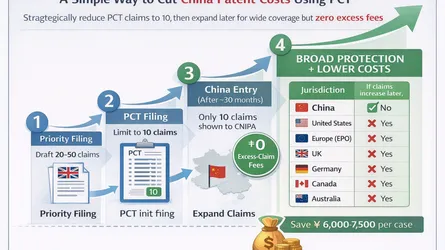
Nothing special — as long as you file your PCT application before the 12-month Paris Convention deadline. Your PCT application, filed within 12 months of your original application, preserves your priority date and pushes your real China national phase decision out to month 30.
This is the key insight: filing a PCT application within 12 months doesn’t mean you’re entering China at month 12. It means you’re buying time until month 30 while protecting your priority date.
The 30-Month Window: Your China Entry Deadline
If you’ve gone the PCT route, month 30 from your original priority date is when you must enter the Chinese national phase. This means:
- Submitting your Chinese translation of the full application
- Paying China’s official filing fees (calculated on claim count and page count)
- Formally committing to prosecution in China
Missing the 30-month deadline is also absolute for most countries. China does not provide a general grace period for late national phase entry. A missed deadline means you must re-file without priority — and everything that’s been published in the intervening 30 months can be used against you.
The Zone Between 12 and 30 Months: Use It
Most inventors and even some IP teams treat this 18-month window as administrative dead time. That’s a waste.
Here’s how to use months 12–30 productively:
Refine your claim strategy. Use this time to assess the Chinese market, identify your most commercially valuable claims, and prepare for the slimming strategy I’ve written about separately. You have until month 30 to decide exactly what claims you need in China.
Commission quality translation. A Chinese patent translation done in a rush at month 29 is a liability. A translation reviewed over two to three months, with technical input from your team and legal review from a China Patent Attorney, is an asset.
Watch the competitive landscape. PCT applications are published at 18 months from priority. That means by month 18, your application is public. Use the window from month 18 to 30 to monitor what competitors are filing in China — this directly informs whether your claim strategy needs adjustment.
Amend under PCT Article 19 or 34. You have specific windows to amend claims and request preliminary examination during the international phase. These amendments can be used strategically to strengthen your position before China national phase entry.
A Timeline You Should Pin to Your Wall
| Milestone | Deadline | Consequence of Missing |
|---|---|---|
| File PCT application | Month 12 from original filing | Lose Paris Convention priority |
| PCT application published | Month 18 | Application becomes public |
| International Search Report | Typically months 16–22 | Evaluate claim viability |
| PCT Article 19 amendments | Before 16 months from priority | Window to amend claims internationally |
| China national phase entry | Month 30 from priority | Lose right to enter (no recovery) |
One Exception Worth Knowing
Design patents (外观设计) in China follow a different, shorter path. The Paris Convention priority window for designs is only 6 months, not 12. If you’re protecting a product’s appearance — packaging, industrial design, device form factor — that 6-month window applies and moves much faster.
Planning your China patent timeline?
Our China Patent team manages your PCT timeline from first filing through national phase entry. Or speak directly with a China Patent Attorney about your specific situation.