




China Licensing or China Manufacturing? Many Inventors Start With the Wrong Question
When inventors contact me about China, they often use the word licensing very quickly.
That sounds sophisticated. It sounds efficient. It sounds like the ideal outcome.
But after reading their materials and understanding the project more carefully, I often come to a different conclusion:
what they are calling a licensing opportunity is often really a manufacturing question, a validation question, or a market-readiness question.
The wording inventors use
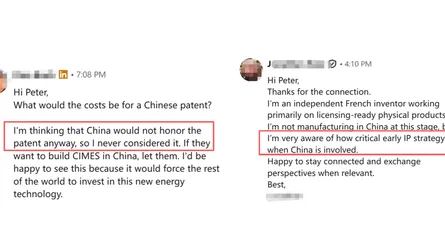
I have received messages such as:
“My goal is to find companies that could be relevant for production and, where there is alignment, potentially discuss licensing as well.”
That wording is revealing.
The inventor is thinking about production and licensing in the same sentence, but the sequence is still unclear.
Another inventor asked about a “licensing or royalty-based partnership” before any meaningful discussion of product maturity, partner type, or real-world proof.
And in one toy-related discussion, the most practical next step was not licensing paperwork at all. It was whether physical samples could be reviewed and whether fast, low-cost content testing could show any market reaction.
That is not a licensing-first problem. That is a validation-first problem.
Why the distinction matters
Licensing and manufacturing are not the same commercial path.
China licensing usually assumes:
- a defined asset
- a clear rights structure
- a believable market story
- a counterparty willing to invest based on that story
- some confidence that the product category and commercial model already make sense
China manufacturing usually assumes:
- a product or prototype that can be built
- a supply chain path
- production feasibility
- cost logic
- perhaps a founder who is still testing what the market actually wants
Many inventors are much closer to the second category than the first.
Why inventors often prefer the word licensing
I think there are three reasons.
1. Licensing feels less risky
If someone else licenses the invention, the inventor imagines that the partner will absorb the hard work: tooling, production, sales, distribution, and capital risk.
2. Licensing sounds more prestigious
For many inventors, licensing feels like recognition. It signals that the market sees value in the idea.
3. Licensing avoids the harder early questions
If the conversation jumps immediately to licensing, the inventor can postpone difficult issues like product testing, user feedback, category fit, pricing, and manufacturability.
But those issues do not disappear. They simply come back later.
What I now look for first
When someone says they want China licensing, I usually step back and ask:
- Is there already a product, or mostly an idea?
- Is there a working sample?
- Does the category map clearly to a Chinese supply chain?
- Does this require a brand partner, a factory, or a distributor?
- Is there already evidence of demand?
- Would a Chinese counterparty know how to evaluate this in ten minutes?
If the answer to most of those questions is no, then licensing is probably not the immediate path.
The toy example is instructive
In the toy mechanism discussion I dealt with, the inventor naturally hoped for commercial cooperation. But from the China side, the situation was still very early.
The category was real. The manufacturing geography made sense. The creativity was there. But what would make Chinese counterparties respond more seriously?
Not a theoretical license discussion.
Physical samples. A better sense of user reaction. Fast content testing. More evidence that the product concept could move from novelty to demand.
That is a classic case where manufacturing logic and market validation come before licensing logic.
A more useful sequence
For many invention-led projects, a more honest sequence is:
- clarify the product
- test whether the category makes sense
- review whether China is the right supply-side fit
- decide whether the commercial path is manufacturing, licensing, or something hybrid
- only then begin targeted partner outreach
That sequence may feel slower, but it is usually faster than approaching the wrong type of partner with the wrong type of ask.
My practical conclusion
When inventors ask me about China licensing, I no longer assume licensing is the right frame.
Sometimes it is.
But often the more useful question is:
What exactly needs to happen before this invention becomes licensable in China?
That is a much better starting point.
Because once you ask it honestly, you often discover that the first real task is not licensing at all.