Before You Ask China to Manufacture Your Invention, Answer These Questions First
Foreign inventors often approach China too early. These real-world questions can help separate a serious manufacturing project from an idea that is still not ready.
Real client inquiries show that inventors often say they want licensing in China when what they really need is a clearer manufacturing or validation path.
A practical China entry guide for foreign startups and product companies on how brand, product, and supplier-side protection should be sequenced before manufacturing begins.
A practical guide to why a standard NDA is often not enough for China supplier conversations, and when contract protection needs to connect with trademark and patent timing.
Most foreign companies discover their China IP problem after it becomes a crisis. Peter Lin explains how the IP之道 framework — built around NNN agreements, trademark registration, and contract localisation — protects your supply chain before production starts.
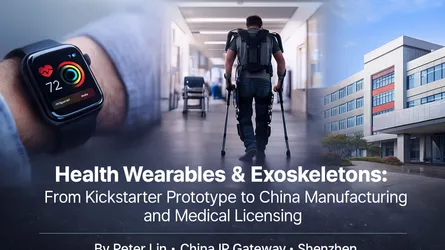
A founder building an exoskeleton asked: "We have a working prototype. How do we take this into China — and eventually into hospitals?" Here are the three things that matter most on that path.
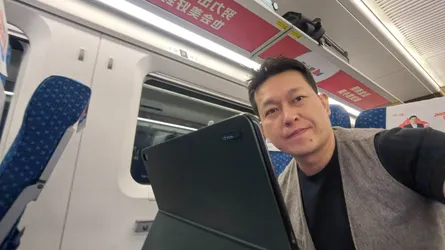
As I sit on a high‑speed train to Xiamen to meet with clients, I’m writing this post because I’ve been getting the same question lately from international founders: “How can I protect my idea in China before it’s even ready for market?” In the U.S., many startups rely on a provisional patent application. It’s like a placeholder that locks in your filing date for 12 months while you refine your product. It’s affordable, flexible and gives you breathing room to perfect your design. But China plays by different rules. There is no provisional system. So what can you do? The answer lies in a unique strategy: filing a utility‑model patent and an invention patent at the same time.

My advice? Research 3-5 target sellers in your product category. Reach out with a tailored, value-first message (they care about profits & uniqueness). Protect your idea before sharing — especially in China’s first-to-file system. Be open to small trial orders to build trust. Think partnerships, not pitches.
When a hardware project goes live on Kickstarter, two things can happen: You go viral. Your copycats go viral before you.