




Type something to search...

All Articles

China IP Guides
blog-thumb
By Peter Lin/ On 05 Dec, 2025

From Idea to Income: Navigating the Chinese PCT National Phase with the Slimming Strategy

When an inventor files a PCT application, the instinct is always to go broad — claim everything you can while the window is open. That instinct is not wrong. But there's a moment, usually around month 28 or 29, when you have to make a very practical decision about China. Do you enter the Chinese national phase with your full PCT claim set — or do you slim it down first? This is a question I've helped hundreds of foreign founders and IP teams navigate. And the right answer almost always involves what I call the slimming strategy. Why China's National Phase Is Different China's China Patent system is built on a "first to file" principle, and CNIPA processes a staggering volume of applications — nearly half of all PCT national phase entries globally. That volume means the system has developed detailed, and sometimes strict, fee structures. Here's the key cost driver most applicants miss: China charges extra official fees for each claim beyond the tenth. If your PCT application entered with 25 claims, you're paying surcharges on 15 of them — before you've even had a single substantive examination. That's not the only cost lever. You're also paying for translation of your entire application into Chinese, typically at a per-character or per-word rate. A long, broad specification with dozens of unnecessary claims multiplies at every step. What the Slimming Strategy Actually Means The slimming strategy is not about giving up protection. It's about entering China with a claim set tailored to what the Chinese market actually needs to protect. Here are the three steps I walk clients through: 1. Audit your claims for China relevance. A US or EU patent may have claims covering specific regulatory contexts, component configurations, or use cases that don't exist in the Chinese market. Strip those before national phase entry. They add cost without adding value. 2. Reduce claim count to 10 or below where possible. If you can consolidate dependent claims without losing core protection, do it before filing the Chinese translation. Every claim above 10 triggers an additional fee at CNIPA. 3. Sharpen your independent claims for the Chinese enforcement context. In China, the enforceability of a patent often comes down to one or two independent claims. Make them tight, clear, and commercially relevant. Abstract claims that might survive in Europe often fail or become unenforceable in Chinese courts. The Right Time to Slim This is critical: you must make slimming amendments before or at the time of national phase entry, typically by the 30-month deadline from your priority date. Amending claims after entering national phase is possible but triggers additional examination rounds and costs. Under PCT Article 19, you can amend claims at the international phase before entering China. Use that window. Work with a China Patent Attorney who understands both Chinese patent law and the commercial context of your product. What Founders Often Get Wrong I see two common mistakes: Mistake 1: Entering with the full PCT claim set to "keep options open." This is expensive and tactically weak. You're paying to protect claims you'll likely never enforce, and bloating your specification makes Chinese examination slower and more contentious. Mistake 2: Slimming too aggressively. Some applicants, trying to cut costs, drop claims they'll later need — especially around manufacturing methods or component-level protection. If copycats are your main risk in China, you often need both product and method claims. The balance point depends on your industry, your enforcement likelihood, and your budget horizon. From Idea to Income: Why Claim Quality Beats Claim Quantity The title of this article uses the word "income" deliberately. A Chinese patent that exists on paper but is never enforced, never licensed, and never cited in a deal is not generating income — it's generating filing fees. Practically, a well-slimmed Chinese patent has immediate commercial value in three situations: Licensing negotiations. When a Chinese manufacturer or distributor is assessing whether to take a license, they want clean, narrow claims — not a sprawling set that a good lawyer can pick apart. A 10-claim application with two irrefutable independent claims is worth more in a licensing meeting than a 30-claim application that invites dispute. Investment due diligence. Foreign investors and acquirers looking at your China market position will assess your registered IP. Clear claim scope with a clean prosecution history signals that the patent was filed with enforcement in mind. Distributing exclusivity. If you want to appoint an exclusive distributor in China, a slimmed, granted patent with specific product claims gives that distributor something real to enforce against copycats. If you're approaching your 30-month deadline and haven't yet thought through your China entry strategy, that conversation needs to happen now — not after CNIPA acknowledges your filing.Need help choosing the right China patent entry strategy? Explore our China Patent services or speak with a China Patent Attorney to plan your national phase entry the right way.

China IP Guides
blog-thumb
By Peter Lin/ On 03 Dec, 2025

Provisional vs. Non-Provisional Patent Applications — Which One Fits Your Kickstarter Launch?

I’m Peter Lin — over the past decade, I’ve helped creators and companies file more than 200 U.S. patent applications. One question I hear again and again — especially from Kickstarter founders — is: “Should I start with a provisional or a non-provisional patent application?” It’s a simple question with a strategic answer. Let’s break it down — from one innovator to another. ⚙️ 1. What’s the Real Difference? Provisional Application Think of it as a 12-month placeholder for your idea. You don’t need formal claims or declarations — just a clear written description and drawings. Once filed, you can label your product as “Patent Pending.” Non-Provisional Application This is the formal patent application that gets examined by the USPTO. It must include claims, drawings, and a declaration. Only after this step can your patent be granted and enforceable. 🧭 2. Which Should You Choose? Your Situation Better Option Why Still refining your prototype Provisional Cheaper, faster, buys you 12 months to improve or test market fit. Ready for full protection Non-Provisional Starts examination immediately; no need to re-file. Tight budget, early Kickstarter stage Provisional Gives you “patent pending” status to attract backers and investors. Confident in technical maturity Non-Provisional Saves time — goes straight to real examination. 💡 3. My Experience-Based Advice After reviewing hundreds of U.S. filings, here’s what I tell early inventors: File something before you go public. Even a rough draft of your invention can lock in your priority date. Use the provisional year wisely. Improve your prototype, talk to investors, validate demand — but remember to convert it into a non-provisional before the 12-month deadline. Don’t treat the provisional as “half-work.” It still needs enough technical detail to prove you actually possessed the invention. For Kickstarter projects: A provisional often makes perfect sense. It gives you credibility (“Patent Pending”) without draining your campaign funds too early. 🕓 4. The Takeaway Provisional = Speed & Flexibility Non-Provisional = Strength & Enforceability Start small, but start right. Your patent strategy should grow with your product — just like your campaign evolves from a concept video to real-world production. China IP Gateway, Peter Lin, IP之道, Intellectual Property China, Trademark Registration China, Patent Filing China, Brand Protection, OEM Risk, China Manufacturing, IP Strategy #ChinaIP #TrademarkChina #BrandProtection #IntellectualProperty #PeterLin #ChinaIPGateway #OpenPTO #IPStrategy https://www.linkedin.com/pulse/provisional-vs-non-provisional-patent-applications-which-peter-lin-ivqfc

Insights
blog-thumb
By Peter Lin/ On 03 Dec, 2025

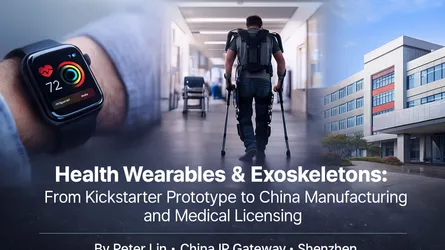
Health Wearables & Exoskeletons: From Kickstarter Prototype to China Manufacturing and Medical Licensing

What to Protect: Algorithms, Structure, and Appearance • Sensor + Gait Algorithms This is your real IP. Never over-explain the logic. Show the effect, not the “how.”• Exoskeleton / Assistive Structures Structural mechanisms (joints, linkages, load-transfer designs) are the hardest to design around. These are the best candidates for licensing later. • Industrial Design If it’s worn on the body, appearance is a selling point. Always file a design patent — it’s part of the user’s “social comfort.”Entering a Chinese Factory: Much Harder Than Kickstarter Health wearables and gait-assist devices are not regular consumer electronics. The factories are different, the requirements are different, and the risks are very real.• Small-batch prototyping is expensive Strength tests, material consistency, safety checks — the bar is high for anything that touches the human body. • Tooling ownership is a trap I’ve seen founders spend two years developing a structure, only to discover the factory considered it “joint development” and sold the same mechanism to another buyer. • ISO 13485 is not optional If you’re building anything remotely medical or assistive, the factory must have medical-grade process control. (I’ve helped overseas teams select compliant factories and helped Chinese factories pass export certification — this always becomes the bottleneck.) • Your Kickstarter prototype is not manufacturable Most health devices require DFM + second-stage engineering with the factory. This surprises every first-time founder.Commercialization: Don’t Just Sell Hardware — License the Capability The future of health hardware is not “sell devices.” It’s licenseability — especially into hospitals, rehab centers, and senior-care institutions.A. License algorithms to B2B institutions Gait analysis Posture detection Rehab training models Data dashboards Hospitals care about outcomes, not your brand size. B. License structural patents to local device makers Let local companies handle sales and regulation. You earn license fees + royalties. C. License full solutions (highest value) Hardware + software + algorithm + rehab protocol + regulatory pathway. This is where long-term revenue lives. One-Sentence Takeaway For health wearables and exoskeleton devices, the real strategy is: Protect the core → Manufacture in China → License into the medical world. Kickstarter is only your first chapter. Licensing is where the story becomes global. If you’re building a health wearable, exoskeleton, gait-assist device, or rehab product, and want help planning IP, factory entry, or licensing strategy — feel free to reach out. I’m based in Shenzhen and see these cases every week.

Insights
blog-thumb
By Peter Lin/ On 01 Dec, 2025

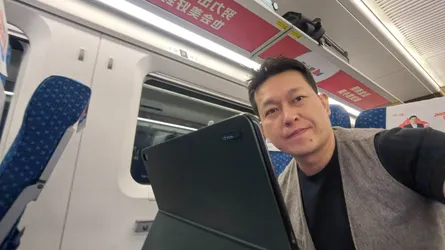
How to Protect Your Idea Quickly in China: A Personal Note from the Train

🇨🇳 Why Dual Filing Works in China A utility‑model patent covers structural or mechanical improvements and typically grants within about six months. Think of it as a quick shield. It gives you an enforceable right early, so you can show investors, partners and even Customs officials that your design is protected. Meanwhile, you simultaneously file a full invention patent, which takes longer but provides stronger, broader protection once it is granted. By starting them both together, you protect yourself at two speeds: fast and long‑term. Once the invention patent is issued, you can withdraw the utility model to avoid double. 🔍 Does it suit every innovation? This strategy shines for hardware or structural improvements—think product casings, mechanical components, new configurations or machinery. For software, algorithms or purely digital inventions, you still need to go through the standard invention patent route (which takes time), and other IP tools like copyright or trade secrets may be more appropriate. 🚀 My advice to fellow founders Don’t wait for perfection. File early, iterate quickly. In China’s “first to file” system, speed matters. Leverage the fast and slow lanes. A utility model buys you time; the invention patent keeps your protection strong for the long run. Tell your story. Investors and partners respond better when you can show that you’ve taken proactive steps to secure your IP, rather than saying “we’re working on it.” As someone who’s helped many startups navigate this path, I know first‑hand how disheartening it is to see a good idea copied simply because the filing happened too late. Don’t let that be your story. If your products touch China, your protection strategy should too. Feel free to reach out if you’d like help planning your IP filings or understanding which options best fit your product. Safe travels and safe ideas!