




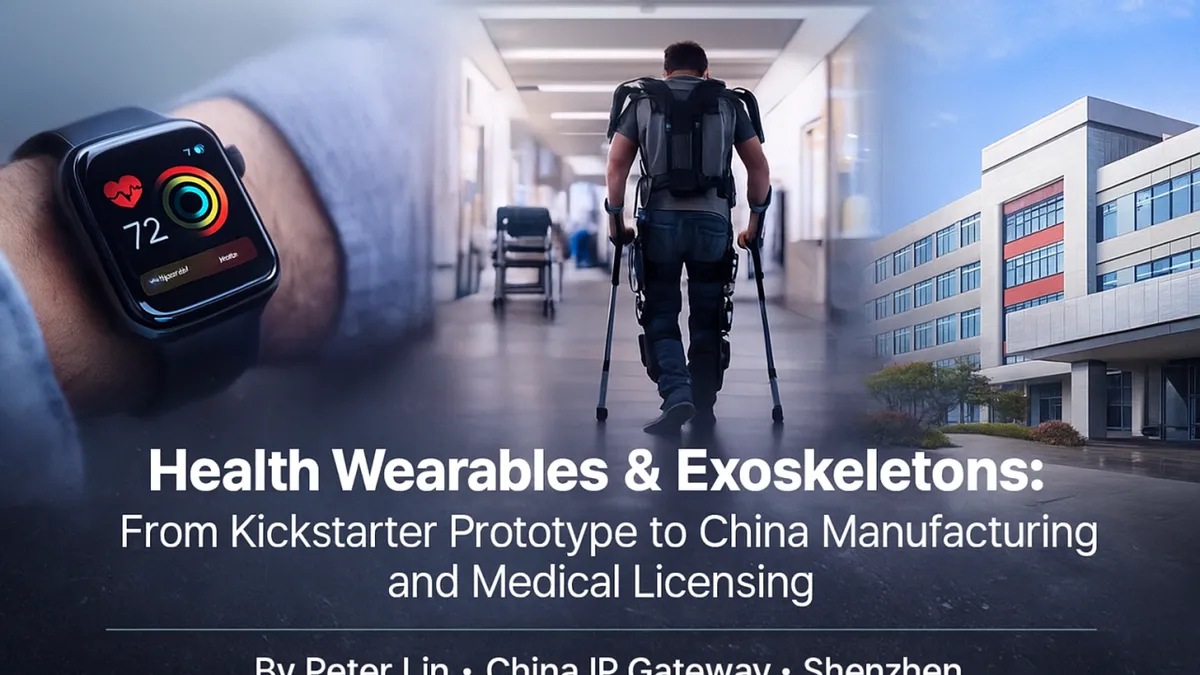
Health Wearables & Exoskeletons: From Kickstarter Prototype to China Manufacturing and Medical Licensing
- What to Protect: Algorithms, Structure, and Appearance • Sensor + Gait Algorithms This is your real IP. Never over-explain the logic. Show the effect, not the “how.”
• Exoskeleton / Assistive Structures Structural mechanisms (joints, linkages, load-transfer designs) are the hardest to design around. These are the best candidates for licensing later.
• Industrial Design If it’s worn on the body, appearance is a selling point. Always file a design patent — it’s part of the user’s “social comfort.”
- Entering a Chinese Factory: Much Harder Than Kickstarter Health wearables and gait-assist devices are not regular consumer electronics. The factories are different, the requirements are different, and the risks are very real.
• Small-batch prototyping is expensive Strength tests, material consistency, safety checks — the bar is high for anything that touches the human body.
• Tooling ownership is a trap I’ve seen founders spend two years developing a structure, only to discover the factory considered it “joint development” and sold the same mechanism to another buyer.
• ISO 13485 is not optional If you’re building anything remotely medical or assistive, the factory must have medical-grade process control.
(I’ve helped overseas teams select compliant factories and helped Chinese factories pass export certification — this always becomes the bottleneck.)
• Your Kickstarter prototype is not manufacturable Most health devices require DFM + second-stage engineering with the factory. This surprises every first-time founder.
- Commercialization: Don’t Just Sell Hardware — License the Capability The future of health hardware is not “sell devices.” It’s licenseability — especially into hospitals, rehab centers, and senior-care institutions.
A. License algorithms to B2B institutions Gait analysis Posture detection Rehab training models Data dashboards
Hospitals care about outcomes, not your brand size.
B. License structural patents to local device makers Let local companies handle sales and regulation. You earn license fees + royalties.
C. License full solutions (highest value) Hardware + software + algorithm + rehab protocol + regulatory pathway. This is where long-term revenue lives.
One-Sentence Takeaway For health wearables and exoskeleton devices, the real strategy is: Protect the core → Manufacture in China → License into the medical world.
Kickstarter is only your first chapter. Licensing is where the story becomes global.
If you’re building a health wearable, exoskeleton, gait-assist device, or rehab product, and want help planning IP, factory entry, or licensing strategy — feel free to reach out. I’m based in Shenzhen and see these cases every week.